CPUC Generation and Energy Storage Team: Keeping California's Electric Grid Safe and Reliable

The California Public Utilities Commission’s (CPUC) Generation and Energy Storage Section (GESS) in the Safety and Enforcement Division helps protect the safety and reliability of California’s electric grid by implementing and enforcing General Order (GO) 167-C for electric generating facilities and energy storage systems. Through oversight of these critical facilities, the GESS team works to reduce the risk of equipment failures and outages, supporting a more reliable electric system for the millions of Californians who depend on it every day.
In 2002, the California Legislature gave the CPUC specific authority to implement and enforce maintenance and operation standards for electric generating facilities, which ultimately led to the adoption of GO 167. On March 13, 2025, energy storage systems were incorporated alongside generating assets through the adoption of GO 167-C. Today, the GESS team implements GO 167-C by conducting comprehensive audits, outage inspections, and incident investigations to verify that these critical grid assets are operated and maintained safely and reliably.
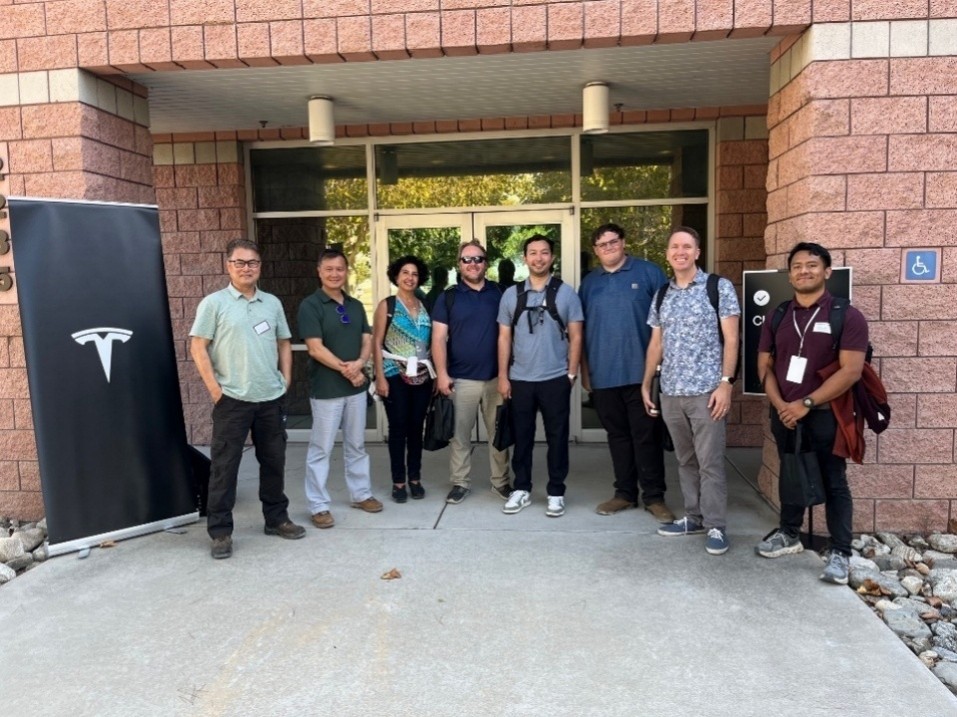
The GESS team at a Tesla energy storage-related training event.
Supporting Safe Battery Energy Storage Systems
Battery energy storage systems are among the key technologies California relies on to achieve its clean energy goals, enhance reliability of the grid, and help manage the impacts of rising energy demand. During periods of low demand, battery energy storage systems can soak up solar- or wind-generated energy and then supply it back to the grid during peak demand.
The GESS team has conducted a series of comprehensive surveys of battery energy storage facility owners. The most recent survey identified 212 generating assets with over 50 megawatts (MW) of power production capability and 136 active energy storage systems over 1 MW. Generating assets include a variety of different technologies like photovoltaic solar, solar thermal, geothermal, steam, and wind facilities, while the energy storage systems predominantly use lithium-ion batteries. All of those assets combined can provide more than 30,000 MW to the grid.
Auditing and Inspecting Critical Grid Infrastructure
A critical part of the GESS team’s work happens in the field. Under the GO 167-C audit program, the GESS team does not just review paperwork from afar. Staff begin by digging into a facility’s outage history, safety-related incidents, performance data, maintenance and operation records, written procedures, recurring problems, and survey responses submitted directly to the CPUC by facility owners. That preparation gives the GESS team a working picture of where the biggest safety and reliability risks may be before they arrive on-site and helps bring focus to the most significant safety and reliability concerns.
Once on-site, the GESS team inspects the facility and equipment and gains insight into how the facility is being operated and maintained in practice. Depending on the facility type, this may involve spot-checking equipment among hundreds or thousands of acres of solar fields, inspecting the interiors of wind turbine towers, climbing the large structures that support combustion turbines and their steam equipment, inspecting rows of battery containers, or looking through any variety of equipment that may be on-site. The GESS team takes those field findings and interviews with facility personnel to review records against actual conditions in the field to assess compliance with GO 167-C.
When the audit is complete, the GESS team issues a formal audit report with findings, identifying any violations, and requesting a response from the facility explaining the corrective and preventive actions already taken or planned. The GESS team then publishes the audit report and facility response on the CPUC’s website for public viewing.
The GESS team also investigates safety incidents and significant outages at facilities that are under the CPUC’s jurisdiction. This includes the Jan. 16, 2025, incident at Vistra’s Moss Landing battery energy storage facility. The GESS team conducted an initial site visit on Jan. 22, 2025, as part of its ongoing investigation into the incident.
Investigations are comprehensive and may include data requests, records review, field work, coordination with other regulatory agencies, root cause analysis, and review of corrective actions.
Keeping California's Grid Reliable
Another area of the GESS team’s responsibilities is its summer Reliability Program. The goal of the program is to keep generating assets and energy storage system owners focused on continuous operation during the high energy demand period between June 1 and Oct. 31 each year.
The GESS team reviews real-time performance data from various data sources, including outage reports, facility-owner updates, and GESS-issued survey responses to identify resources with reduced availability, extended or recurring outages, or other constraints that could affect energy reliability.
If a facility experiences a significant or extended unplanned outage, the GESS team contacts the facility owner for the cause, expected return-to-service date, and any corrective actions. The team may initiate a rapid audit of the facility if the outage is significant and an in-person presence is important to understanding the root cause of the issue.
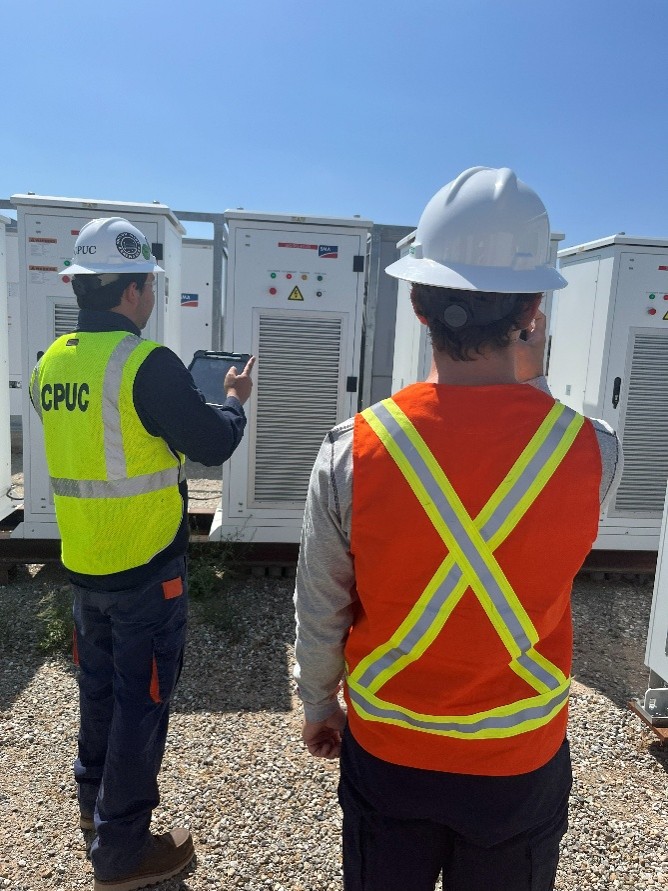
GESS team members inspecting battery energy storage system equipment.
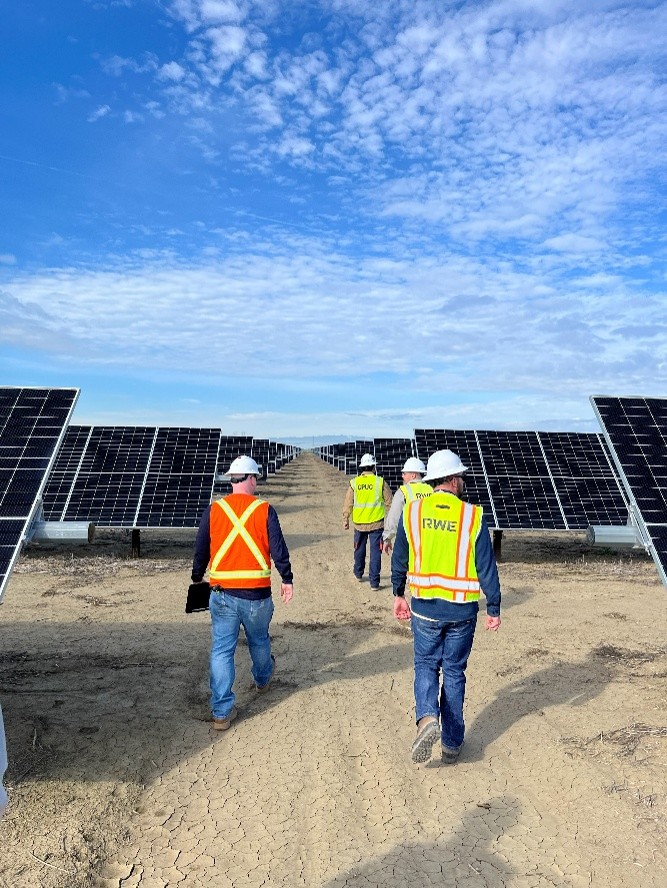
GESS team members walking a solar field during an audit.
Expanding Capacity to Oversee a Changing Grid
In response to the rapid growth of energy storage systems in California, the GESS team was expanded into two sections, GESS-North and GESS-South, with 10 additional positions, including supervisors, engineers and analysts.
Since GO 167 was amended on March 13, 2025, the GESS team has completed 17 audits at battery energy storage system facilities. Also since that time, the GESS team has investigated, or is in the process of investigating, more than 15 reported battery energy storage system incidents. For FY 2026-27, the GESS team plans to audit 28 generating and energy storage facilities.
As California’s electric grid continues to evolve, the CPUC’s GESS team plays an increasingly important role in ensuring that generating facilities and energy storage systems operate safely and reliably. Through rigorous audits, inspections, incident investigations, and ongoing reliability monitoring, the GESS team helps identify risks, promote accountability, and verify that facility owners are meeting the standards established under GO 167-C. This oversight supports a more resilient electric grid, strengthens public confidence in California’s growing clean energy infrastructure, and helps ensure that the electricity Californians rely on every day remains safe, reliable, and available when it is needed most.
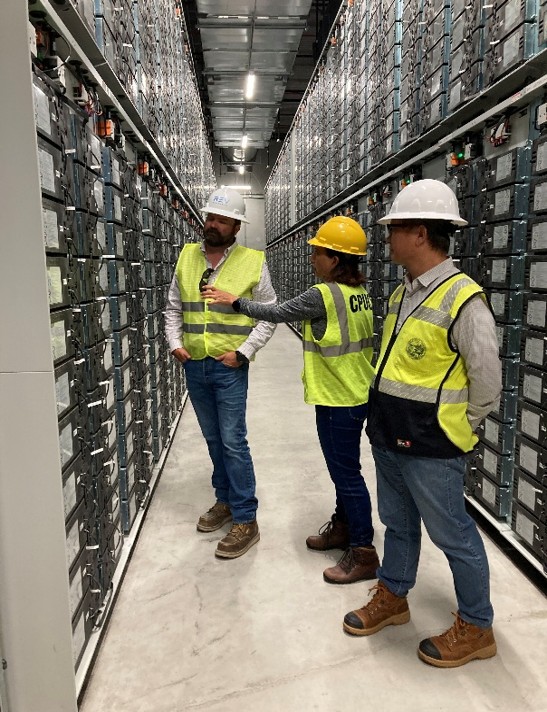
GESS team leaders, Banu Acimis and Chihsien "Eric" Wu, inspect battery energy storage racks with facility staff.