Behind the Scenes: How CPUC Transportation Staff Help Keep World Cup Fans Safe
Featured Story

For most fans heading to Levi’s Stadium for the 2026 FIFA World Cup, the night begins with a simple tap on their phone.
A rideshare arrives. A charter bus drops off a group of friends. A black car pulls into a designated loading zone. Thousands of people travel to and from the event without giving much thought to what happens behind the scenes to make their trip safe.
While fans cheered inside the stadium during the match between Paraguay and Australia on June 25, another team was already hard at work outside.
The California Public Utilities Commission’s (CPUC) Transportation Enforcement Branch (TEB) was walking parking lots, talking with drivers, checking permits, and working alongside the California Highway Patrol (CHP), the Santa Clara Police Department, and the Governor’s Office to help ensure passengers were getting into vehicles operated legally and safely.
This type of vigilance and oversight is what most people never see but it plays an important role in protecting Californians at some of the state’s largest public events.
Keeping Transportation Safe Before the First Kick-off
One concern during large events is illegal passenger transportation. Some drivers solicit rides for cash without the permits or insurance required under California law, while others attempt to operate outside the rules that licensed transportation providers must follow. These illegal operators can leave passengers with few protections if something goes wrong.
That’s where the CPUC comes in.
The CPUC’s TEB oversees commercial passenger transportation companies throughout California, carrying out inspections and enforcement actions for state regulations established to protect consumers.
During the World Cup, TEB enforcement analysts worked with partner agencies to observe transportation activity, conduct compliance checks, and identify operators providing passenger service illegally.
The operation is one example of the CPUC’s ongoing transportation enforcement efforts, which also support other high-profile events across California, including previous Super Bowls.
More Than Lyft and Uber
Many Californians are familiar with rideshare companies like Lyft and Uber, but few know the rules that govern different types of passenger transportation.
What are TNCs and TCPs?
As Destiny Graham, a CPUC Senior Transportation Enforcement Analyst explains in the video, there are differences between Transportation Network Companies (TNCs), such as Lyft and Uber, and Transportation Charter Party (TCP) carriers, including limousines, charter vehicles, and other prearranged transportation services.
Whether someone is requesting a ride through an app or hiring a charter vehicle for a special event, the permitting process helps establish safety and accountability standards for companies transporting passengers.
A Team Effort to Protect the Public
Transportation enforcement is a team sport during large events requiring close coordination among multiple agencies.
Each agency brings a different responsibility.
Local law enforcement helps maintain public safety and respond to incidents.
The CHP has authority to issue citations and impound vehicles when appropriate.
The CPUC contributes specialized expertise in passenger carrier regulations, helping identify and hold accountable unsafe transportation providers, including solicitors operating without the permits required under California law.
Working together allows each agency to focus on its area of expertise while creating a safer transportation environment for everyone attending the event.
Why the CPUC is Here?
In this video, Pat Tsen, Deputy Executive Director of Safety and Consumer Protection at the CPUC, discusses why transportation enforcement is an important part of the CPUC’s mission and how these operations help protect Californians before, during, and after major public events.
Protecting Consumers One Ride at a Time
For most fans leaving Levi’s Stadium, the goal is simple: get home safely.
The work happening outside the stadium helps make that possible.
Every permit checked, every compliance check completed, and every illegal operator identified contributes to a transportation system that Californians can trust.
Whether it’s a World Cup match, the Super Bowl, or another major event, the CPUC’s Transportation Enforcement Branch works behind the scenes so Californians can travel with greater confidence.
The public can visit the CPUC’s Transportation Carrier Portal to see if a transportation company is licensed and in good standing.
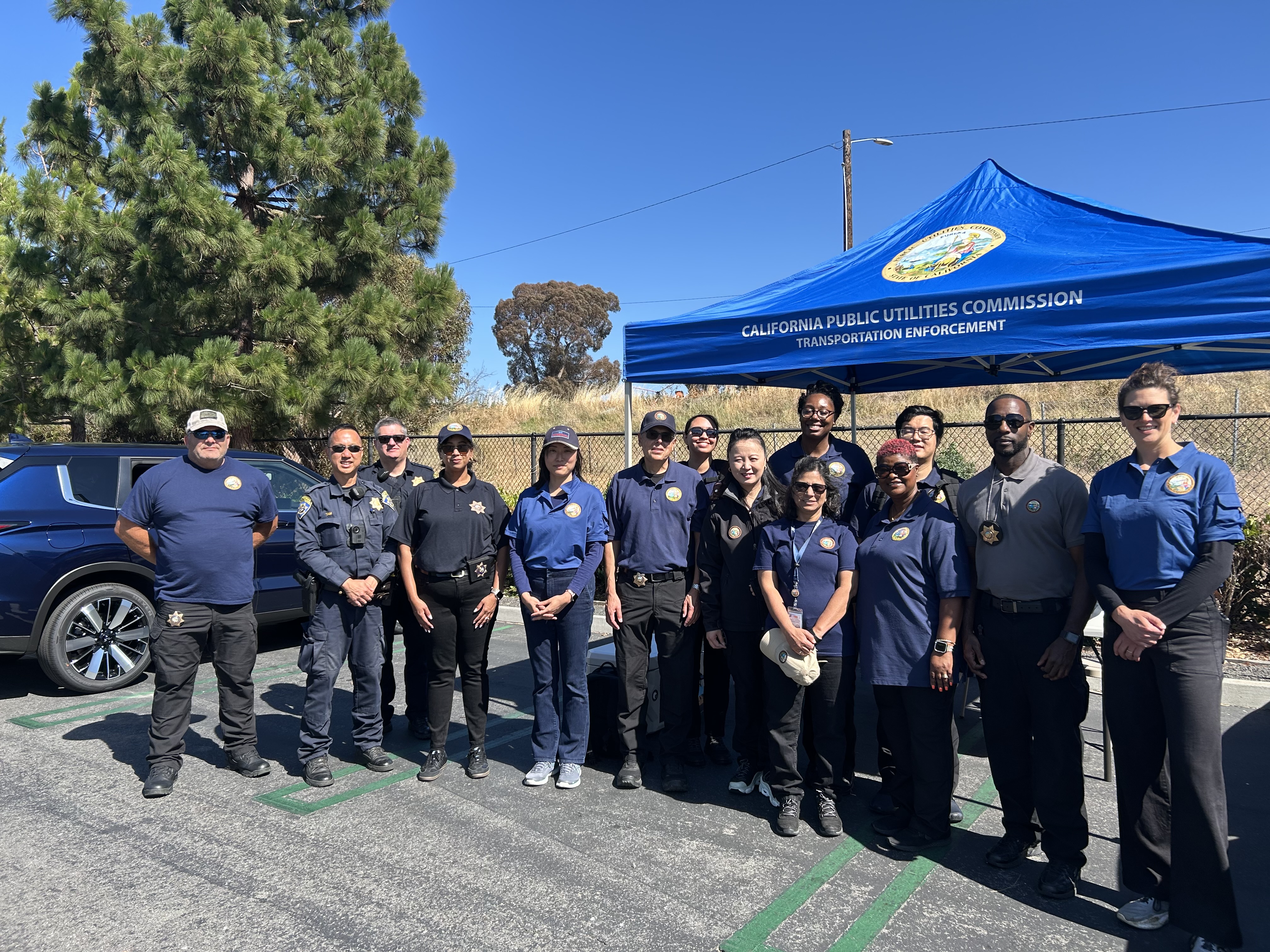
CPUC staff with California Highway Patrol at Levi's Stadium
By Taseen Shamim and Liza Martin, CPUC Information Officers