Meeting California's Climate Goals: The Transition to a Carbon-Free Electric Grid

California’s ambitious climate agenda rests on a critical goal: supplying 100 percent of retail electricity sales with renewable and zero-carbon sources by 2045.
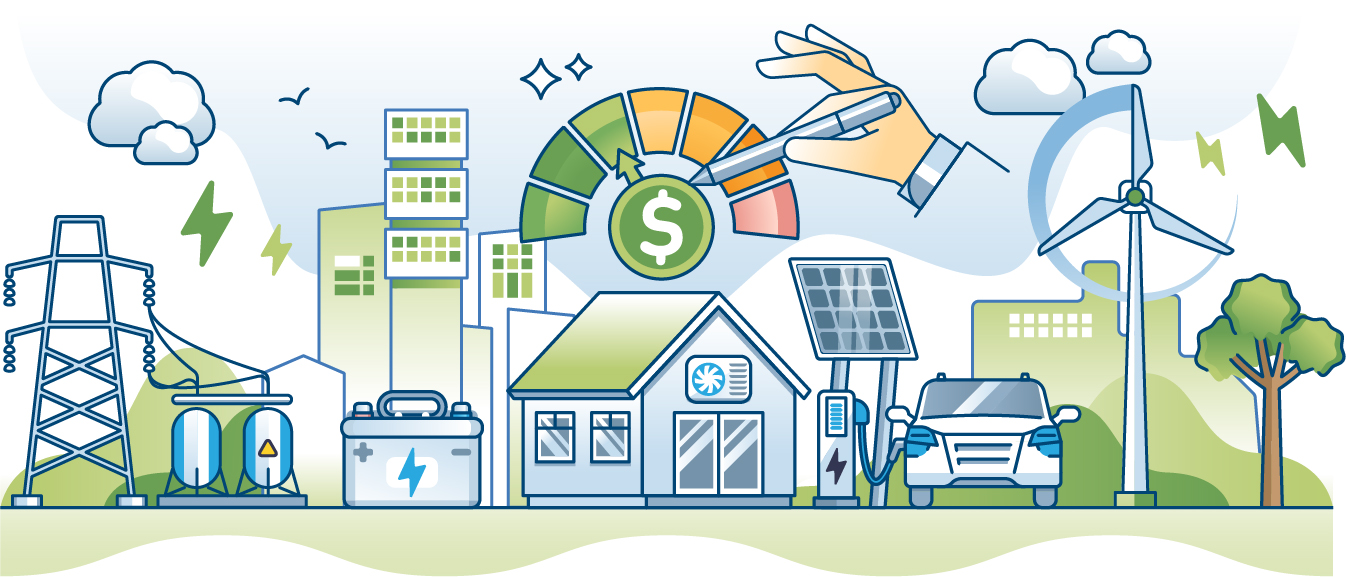
The electric grid is the bedrock of a carbon-free economy. As Californians swap out natural gas-powered technologies for electric ones, such as heat pumps, induction stoves, and electric vehicles, the electricity grid will power more of our lives, requiring increasing amounts of reliable, clean energy. As California’s grid undergoes a transition to carbon-free electricity, the challenge is to keep rates reasonably priced for the adoption of electric technologies to pencil out for customers.
The California Public Utilities Commission (CPUC) helps ensure electricity providers procure clean energy for customers, enables grid expansion at fair rates, and incentivizes customers to adjust their power usage during peak periods. From overseeing large-scale solutions like renewable energy generation, deployment of battery storage, and grid modernization, to implementing innovative customer-side programs that help to decarbonize while maintaining reliability, the CPUC is helping lead the state’s transition to clean electricity.
“The CPUC is working in real-time to make California’s vision for carbon-free electricity a reality and secure a cleaner and more prosperous future for all Californians. Importantly, we are also implementing the least-cost path to decarbonizing our electricity system while ensuring utilities maintain safe and reliable service to customers,” said Leuwam Tesfai, the CPUC’s Executive Director.
Ensuring Utilities Invest in Clean Energy to Meet the Renewables Portfolio Standard
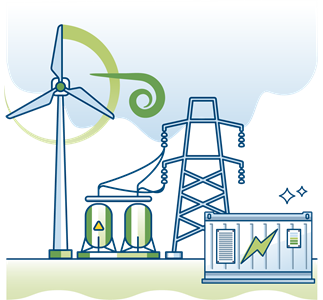 The CPUC implements and administers the state’s Renewables Portfolio Standard (RPS) program, which sets requirements for retail electricity providers like utilities and community choice aggregators. Senate Bill 100 set the requirement of retail sales to come from 60 percent renewable resources by 2030 and requires that all electricity come from carbon-free sources by 2045.
The primary venue for this implementation of the RPS is through the CPUC’s RPS proceeding, which coordinates with the Integrated Resource Planning (IRP) proceeding. IRP details the portfolio of resources utilities plan on using to meet forecasted electricity demands while minimizing costs to customers, ensuring reliability, and complying with the RPS. The CPUC ensures IRP is aligned with the RPS and California’s clean energy goals and authorizes the procurement of new generation accordingly. Load serving entities submit their RPS Procurement Plans to the CPUC annually and their IRP plans biennially.
“Since the establishment of the California’s RPS program in 2002, the CPUC has guided policies, enforcement, and programs that allowed California to meet and exceed the RPS and build an electric system that at times can provide 100 percent clean energy,” said Cheryl Lee, the CPUC’s Supervisor for Renewables Procurement.
Since 2020, the state’s retail electricity sellers have developed more than 27,000 megawatts (MW) of new clean energy supply to serve California’s needs and entered contracts to procure an additional 22,000 by 2030. Through a February 2026 decision, the CPUC took an important step by requiring electricity providers to procure 6,000 MW of new clean energy and storage capacity by 2032. All 6,000 MW must now come from clean energy generation, and at least 25 percent of the new procurement must be from resources that have the attributes associated with clean, firm power and/or long-duration energy storage.
Proactively Planning for Grid Expansion at Fair Rates
Keeping California’s energy system safe and reliable while transitioning to carbon-free energy requires continuous investment in our transmission system. The CPUC supports the state’s proactive planning process for transmission infrastructure by submitting portfolios of new generation and storage resources to the California Independent System Operator (CAISO), which evaluates and plans needed transmission upgrades. This process not only charts a path for the state to reliably meet its clean energy goals but helps the CAISO plan transmission at the lowest feasible cost by aligning infrastructure investments with where clean energy and storage provide the greatest system value.
The CPUC sets parameters to determine how utilities balance the cost of building new infrastructure while ensuring customers are protected from excessive financial costs. The CPUC also represents the interests of California ratepayers before the Federal Energy Regulatory Commission, which regulates interstate transmission infrastructure, to ensure that just and reasonable rates are passed to California ratepayers.
Empowering Customers Through Demand Response
While California is making significant strides in renewable energy, the hours of the day when solar and wind energy are most abundant don’t always match when we use the most energy. When this happens, grid operators may have no alternative but to fire up natural gas power plants to keep the lights on.
So how do we bridge the gap between when clean energy is produced and when it’s needed? Demand response programs administered by utilities and regulated by the CPUC incentivize customers to shift or reduce their electricity use during times of high demand. Customers with batteries paired with solar can also capture excess solar midday and use it on site later during the day. The CPUC has decades of experience in implementing demand response policy, making California the nation’s leader on demand response.
By participating in demand response programs, including dynamic flexible rates, Californians can become part of the solution while lowering their bills and/or earning financial incentives, turning everyday energy choices into climate action.
Where We Are Now
Through these efforts, the CPUC has supported three consecutive years of record renewable procurement in the state and the installation of 17,000 megawatts of battery storage, helping the grid optimize our abundant solar resources in non-daylight hours. Now, more than two thirds of California’s grid is powered by carbon-free sources. California’s grid has run on 100 percent clean power for an average of nearly 6 hours per day in 2025, marking a 750 percent increase in clean-energy days since 2022.
Stay tuned for future articles in this series that will examine the CPUC’s role in eliminating emissions from the building, transportation, and industrial sectors, which, — spoiler — involves helping them connect to an increasingly low-carbon grid.
About the Base Services Charge
The CPUC implemented a Base Services Charge mandated by Legislation for the state’s investor-owned utilities. It is not a new fee, rather, it covers CPUC-approved infrastructure and maintenance costs. These costs were previously included in customer electricity usage costs. Separating these costs from electric use costs lowers the price per kilowatt-hour for electricity for customers.
This is the first article in the CPUC’s “Meeting California’s Climate Goals Series” exploring the agency’s role in the statewide transition to a carbon-free economy. We highlight the regulatory levers and programs that help position the state on the least-cost path to net zero emissions across the electric, buildings, transportation, and industrial sectors.
By Liza Martin, Public Information Officer