
CPUC Last Mile Broadband Deployment Project Brings Connectivity to Tolowa Dee-ni’ Nation

With assistance from the California Public Utilities Commission (CPUC), the Tolowa Dee-ni’ Nation in Northern California near the Oregon state line is preparing to deploy its first tribal-owned fiber network that will provide faster connectivity for the tribe and allow it to manage its own private network.
Funded through the CPUC’s Last Mile grant, the Tolowa Federal Funding Account broadband project encompasses 10 miles of fiber that’s mostly underground, running north along Highway 101 near the Oregon border and south to Dr. Fine Bridge in Smith River Del Norte County. It will serve 16 businesses, 13 anchor institutions, three public safety locations, benefiting 1,206 people. The Federal Funding Account is a CPUC grant program for Last Mile infrastructure projects with a focus on connecting Californians to broadband services.
“This fiber will be the backbone of the Tolowa Dee-ni' Nation’s internet and access to the outside world. As speeds improve, technology shifts, and the way we all interact changes, the tribe can be confident that we have the infrastructure to move forward.
There’s a huge community benefit. We think our costs for internet will go from sky-high down to affordable because we have our own broadband network, bringing reliable, affordable broadband to so many homes,” said Tim Hoone, Tolowa Dee-ni' Nation Planning Director.
The Federal Funding Account broadband project connects to California’s Middle Mile network, giving the tribe leverage to provide broadband 21 miles south to Cresent City to connect to the Yurok Telecommunications Corporation’s Middle Mile section. Together, the two projects will provide 55 miles of tribal-owned fiber in which the greater Humboldt and Del Norte County region will benefit from.
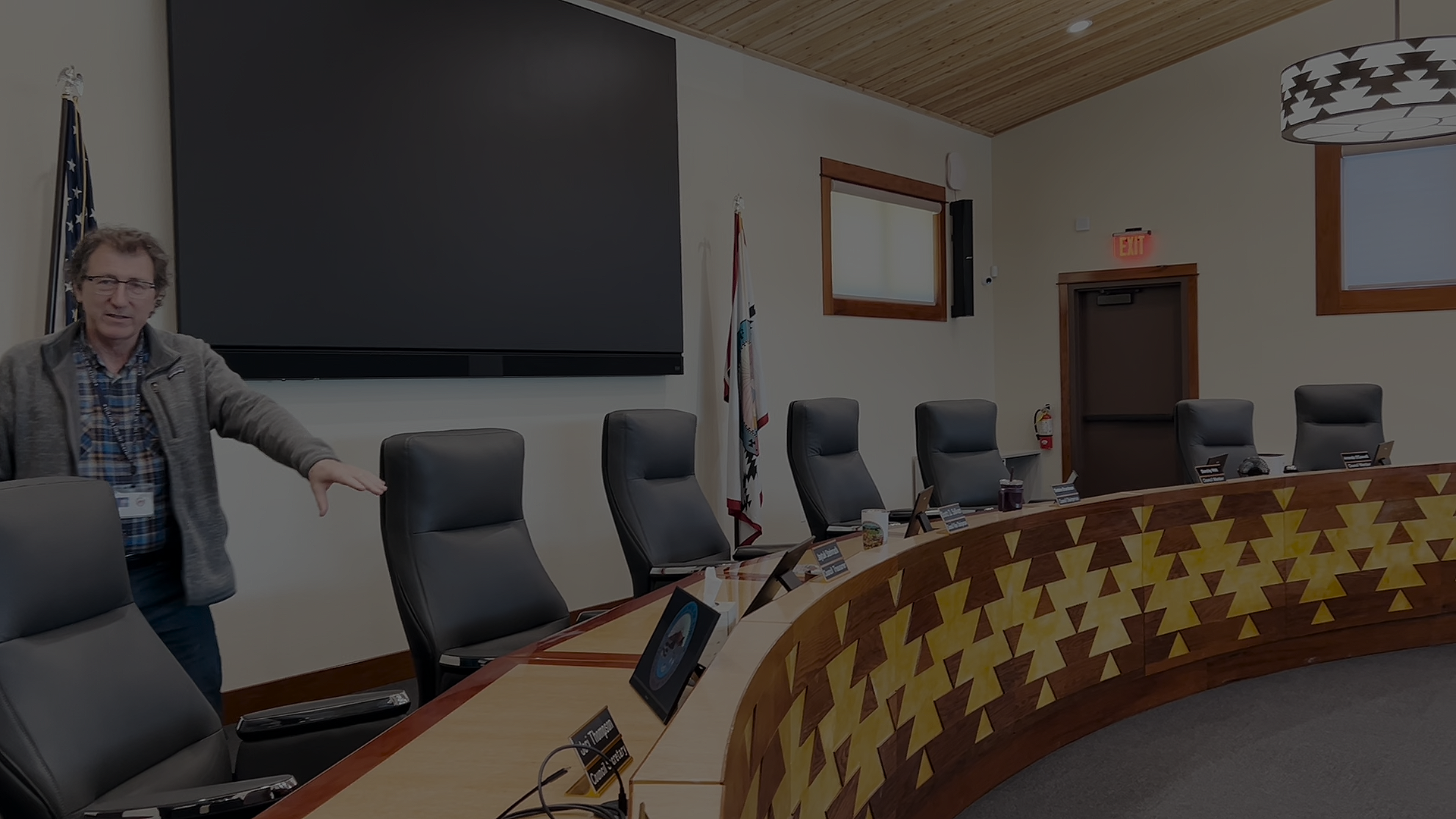
Broadband provides Tolowa citizens with the opportunity to attend Tribal Council meetings virtually.
Improved governance
Broadband is looked to as critical infrastructure similar to other lifeline sectors such as water and energy systems and has become crucial for connecting people to economic, social, and government engagement. Hoone explains how broadband will improve tribal governance by increasing efficiency, communication, economic development, cultural preservation, and tribal citizen participation.
Without broadband everything would come to a screeching halt. All of our systems are now online, they’re electronic. We don’t pay any bills on paper anymore. It all gets scanned in and then we approve it online. Without broadband, all of those processes wouldn’t be possible,” said Hoone.
Reliable fiber will allow the tribe to broadcast its Tribal Council meetings virtually that take place twice a month, giving all tribal citizens the opportunity to participate. Tolowa Dee-ni' Nation has 2,100 citizens, half of which live locally, while the other half live off-reservation throughout the country and world.
Broadband will also modernize Tolowa’s administrative systems, increase transparency, and improve utility services with real-time monitoring and control. The Nation operates its large water waste treatment plant as well as drinking water and distribution system and fiber is imperative in managing those utilities. Broadband will give the tribe the ability to remotely operate and maintain the water systems and identify issues as they arise with centralized management and data-driven decision making.
“High speed internet is essential in today’s life and will help with my job. With Broadband, I will be able to monitor and track the water system remotely and get ahead of any potential problems. I will be able to review data, identify trends, and see what water infrastructure is turning on correctly and potentially not turning on and how often these patterns occur,” said Don James, Utility Operations Manager for Tolowa Dee-ni’ Nation.
Digital sovereignty
From a day-to-day operations standpoint, the Nation will be better able to protect sensitive information and cultural artifacts. The private digital network will create a virtual archive for cultural preservation to store sensitive information about cultural sites, photographs, and items such as language recordings that the Tribal Historic Preservation Office manages. Hoone explains that this is data sovereignty in action.
“Sovereignty is a defining feature of the Tolowa as a people. The Tolowa have lived in this region since time immemorial and have their own belief about the land and life and who they are as a people. That belief as a people gives them a sovereign right to exist and live and govern themselves. In the modern world, we need data to exist, so all of that data becomes sovereign as well,” Hoone explains.
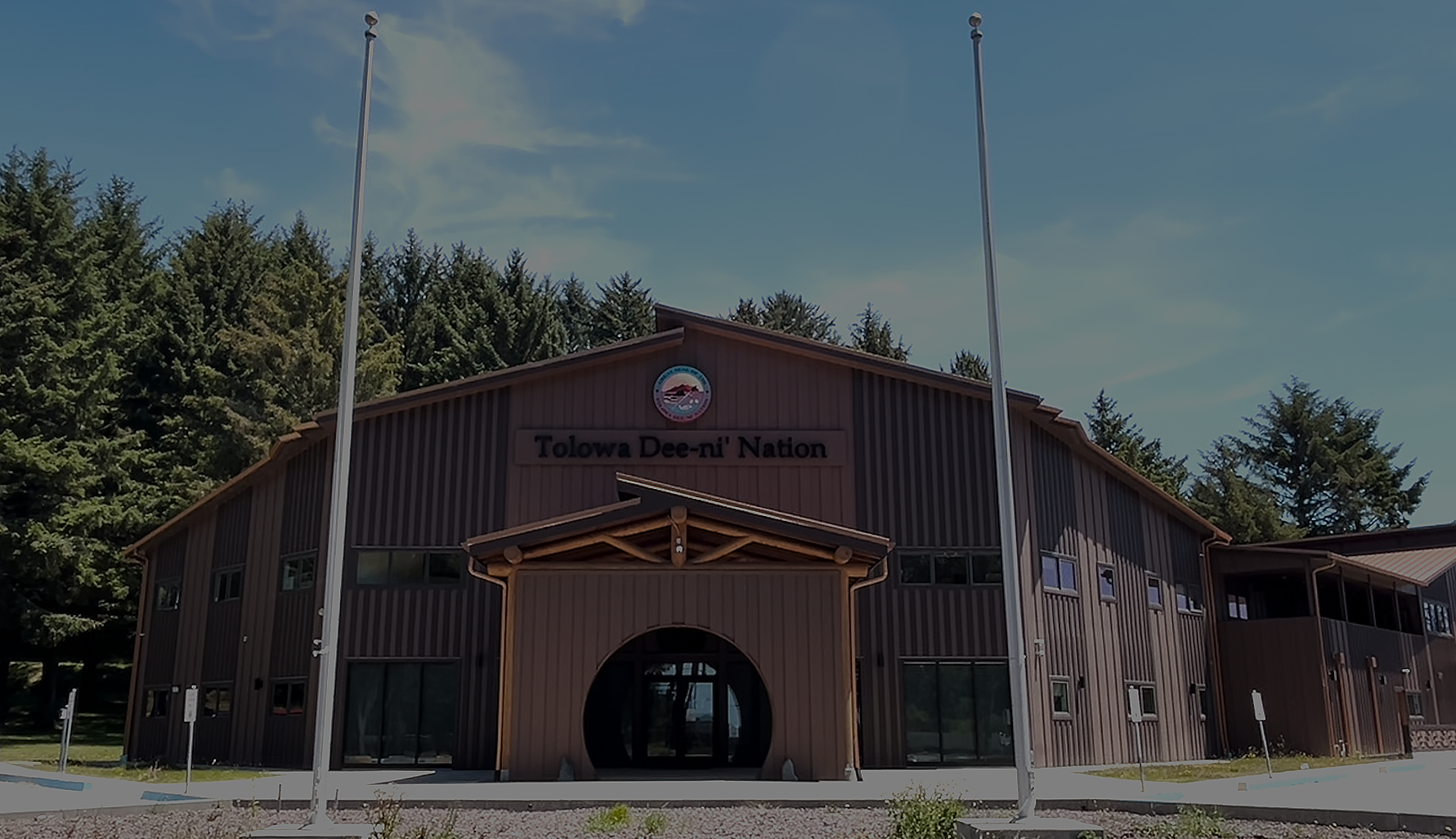
Broadband deployment improves tribal governance for Tolowa Dee-ni' Nation.
Tribal Technical Assistance Program
The CPUC’s Tribal Technical Assistance Program focuses on building broadband capacity on tribal lands through resources, planning, and needed expertise. The funding is essential during the initial stages of a broadband project and can be used for feasibility and environmental studies, engineering design, need assessment reports, strategic and business plans, and marketing studies.
Since 2020, the CPUC awarded $9.4 million in Tribal Technical Assistance and $4.9 million in Local Agency Technical Assistance grants which support broadband planning.
“The technical assistance from the CPUC helped us understand how big of a system is needed, how many people locally do not have broadband, how many people would benefit from broadband, how many businesses and community anchor institutions are available locally. It helped us fund the time and outside experts to look at all of that,” said Hoone.
Hoone explains the Nation received Tribal Technical Assistance to complete a feasibility study. The CPUC funding helped address the type of broadband needed, if there should be towers, the current gaps in the internet system, and if the Nation should operate its own internet network or lease it out.
From the feasibility study findings, the Nation came up with a preliminary design for its broadband network that would meet the needs for the region with underground fiber that’s lower maintenance and more reliable. The feasibility study helped the Nation secure CPUC Last Mile funding to deploy fiber optics to homes and businesses. The infrastructure deployment will take place in summer 2026 through spring 2027.
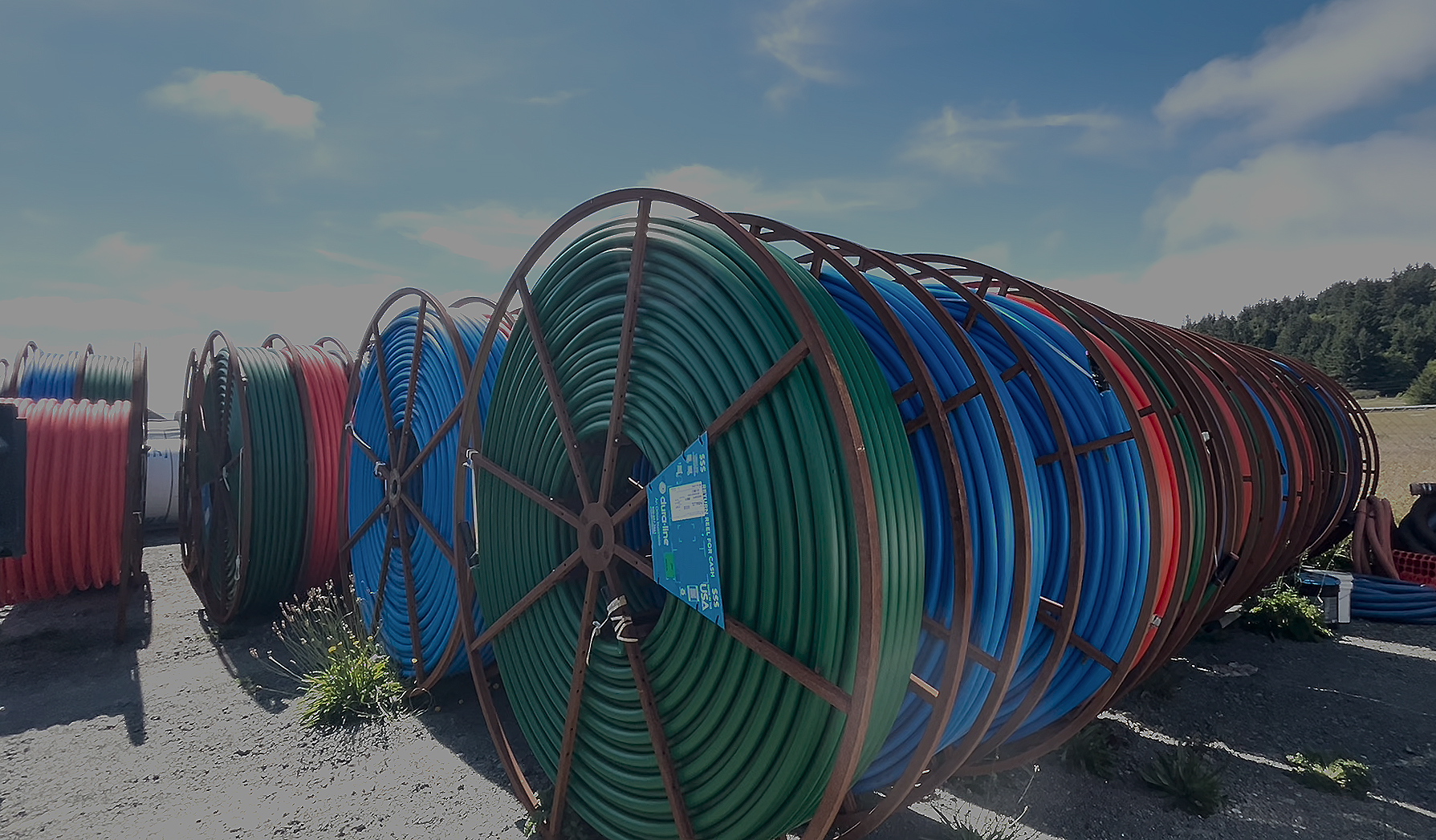 Tolowa prepares for broadband deployment scheduled for summer 2026.
In an effort for broadband to reach more tribal communities in California, the CPUC recently expanded the Tribal Technical Assistance Program. Updates include broadening project type and location on reservations, trust lands, and surrounding communities, and expanding eligibility by allowing the formation of Tribal Consortia.
“A strong relationship is one where we both trust each other. The CPUC is providing expertise and that information will be used in our best mutual interest. And having strong relationships with private engineers and consultants is another key factor. The third-party expertise work with tribes and the CPUC on projects, communicating how many fiber lines are needed, what the system should look like. They help make sure the project meets the needs of the tribe and goals of the CPUC, because sometimes technical details can be a lot to figure out on your own,” said Hoone.
By Andrea Marvin, Public Information Officer