Bridging the Gap: How the CPUC’s Last Mile Federal Funding Account is Powering Broadband for All
Featured Story

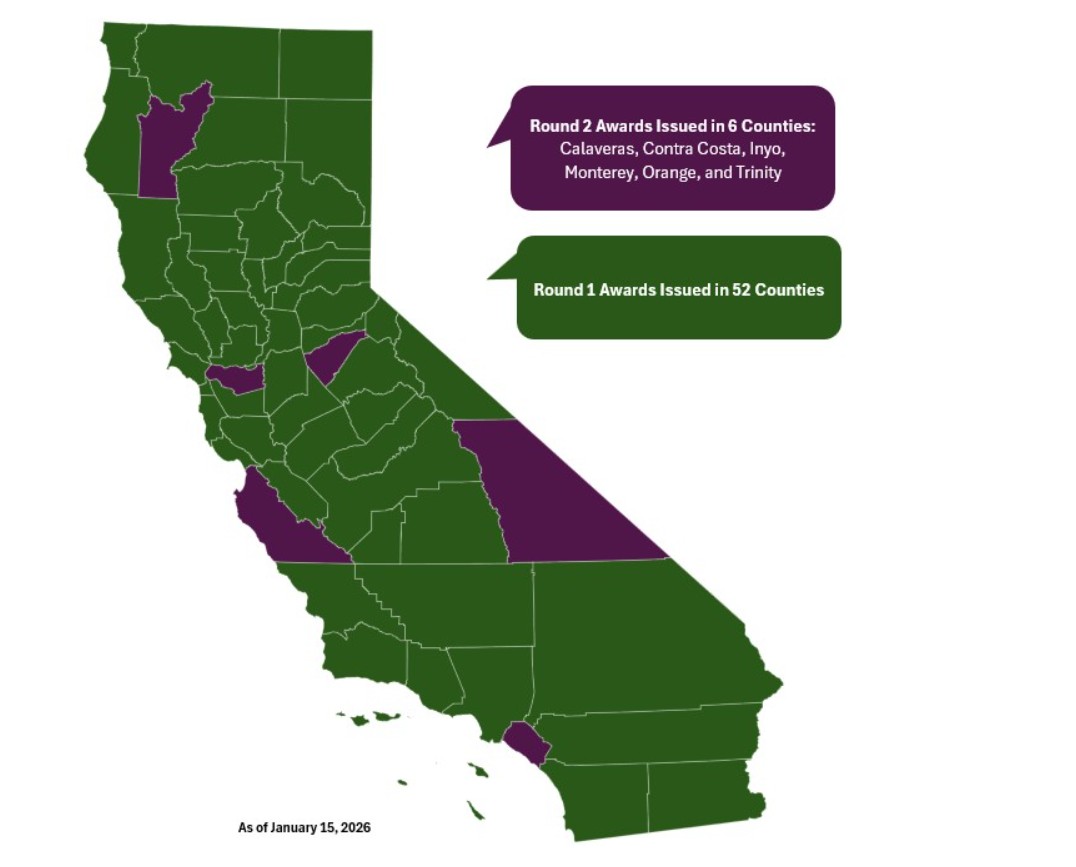
A map of the 58 California counties that received Round 1 and 2 Last Mile Federal Funding Account awards, representing nearly $1.23 billion in broadband investments across the state.
High-speed internet is no longer a luxury. It is how students complete homework, how families schedule doctor visits, how small businesses grow, and how communities stay connected during emergencies. Yet for many Californians, especially in rural, Tribal, and low-income areas, reliable internet service has remained out of reach.
That gap is exactly what the California Public Utilities Commission (CPUC) set out to close through the Last Mile Federal Funding Account, also known as the FFA. Created as part of California’s broader Broadband for All commitment, the program focuses on bringing high quality internet service directly to the homes and neighborhoods that need it most.
What Broadband and the Digital Divide Mean
Broadband refers to high-speed internet that supports everyday activities like video calls, online learning, streaming, and accessing essential services without disruption. It relies on infrastructure such as fiber optic and wireless networks that can deliver consistent and reliable connections.
The digital divide describes the gap between communities that have access to this level of service and those that do not. In many parts of California, geography, cost, and lack of infrastructure have left residents behind. The result is unequal access to education, healthcare, employment, and public safety resources.
The Last Mile Federal Funding Account was designed to help change that.
What the Program Does
The Last Mile program focuses on the final stretch of broadband infrastructure, the part of the network that brings service directly into homes, apartments, businesses, and community institutions. While California’s Middle Mile Broadband Initiative builds the statewide backbone, the Last Mile program ensures local communities can actually connect to it.
Through Senate Bill 156, California committed nearly $2 billion to this effort. The program also supports planning, technical assistance, and financing tools so local governments, Tribes, and community partners can build networks that work for their residents.
The goal is simple and ambitious at the same time: make reliable, affordable internet available in every corner of the state.
The Impact So Far
Since the program launched, the results have been significant and continue to grow as Round 2 funding is distributed.
.png)
These investments are already translating into real life improvements. Students can attend virtual classes from home instead of sitting outside businesses for Wi-Fi. Families can access telehealth services without long drives. Small businesses can reach customers and operate more efficiently.
Many projects also include affordability commitments, offering low-cost plans and participating in the CPUC’s assistance program California LifeLine or similar programs to ensure service is within reach for low-income households.
Investing Where It Matters Most
The program is intentionally focused on equity. A majority of funded projects serve disadvantaged and underserved communities. Many are located in high fire threat districts, where underground fiber construction improves both connectivity and public safety.
More than half of awarded projects connect directly to California’s statewide Middle Mile network, helping reduce long term costs and improve reliability. Together, these investments are strengthening local infrastructure while building a more resilient statewide system.
A New Chapter for Los Angeles County
In Los Angeles County, construction has begun on one of the most ambitious broadband projects in the state. The Gateway Cities Council of Governments and Plenary Broadband Infrastructure are building a 125-mile fiber network that will connect 24 City Halls across southeast Los Angeles.
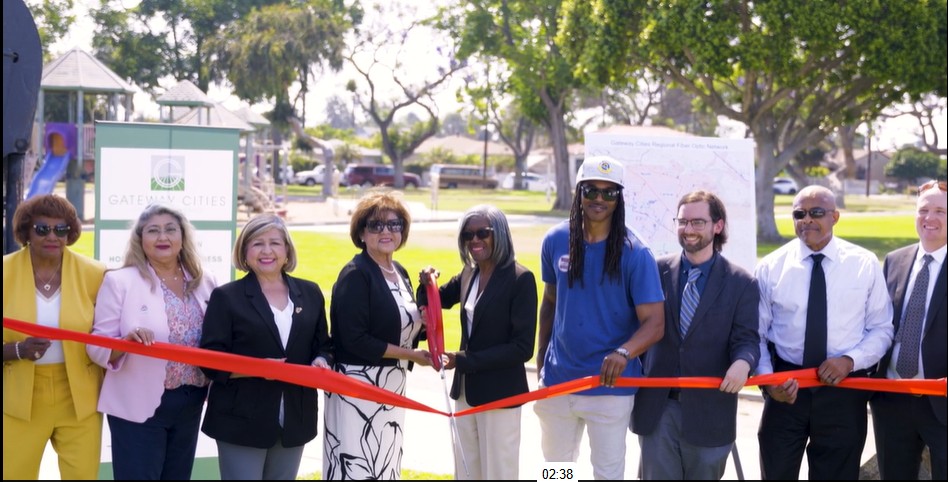
CPUC Commissioner Darcie L. Houck’s Advisor Caleb Jones at the Gateway Cities groundbreaking ceremony on June 25, 2025. Source: ENTRUST Solutions Group
The $104 million project is being supported by the CPUC’s Last Mile Federal Funding Account and the California Department of Technology’s Middle-Mile Broadband Initiative. Once completed, the network will deliver lightning-fast internet to communities that have historically been underserved.
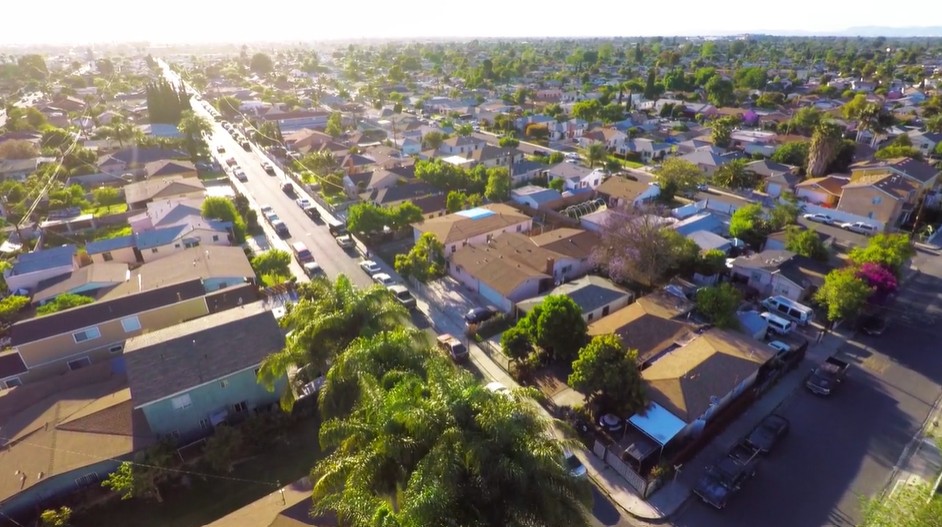
Aerial footage of Compton, Calif., where FFA grants will be utilized. Source: ENTRUST Solutions Group
“This is the best, and in our communities, we’re not used to getting the best,” said Hector De La Torre, Executive Director of the Gateway Cities Council of Governments, in an article in LAist. “We’re used to getting what’s left.”
During the pandemic, many students in these neighborhoods sat outside fast food restaurants to connect to Wi-Fi and do their homework. This project helps families get high-speed internet at home, helping bridge the digital divide.
Building Connections in Tulare County
In the heart of the Central Valley, Tulare County is another example of how the CPUC’s program is creating real change. On August 22, 2024, the county received $36.6 million in grants through the Last Mile program, including $10 million for the Terra Bella project by VARCOMM Broadband and $26.6 million for the Tulare Agriculture County project with Comcast.
Together, these projects will bring internet access to more than 40,000 residents in communities such as Alpaugh, Dinuba, Pixley, and Terra Bella.
Tulare County has also joined neighboring counties like Fresno, Kings, Madera, and Merced to work on regional broadband efforts. This spirit of collaboration shows how the CPUC’s investments are inspiring local action across California.
Why This Work Matters
Access to high-speed internet shapes nearly every part of modern life. It affects how people learn, work, stay safe, and connect with one another. The Last Mile Federal Funding Account is about more than building infrastructure. It is about investing in people and communities.
With projects now reaching every county in California and Round 2 funding expanding that reach even further, the program is helping turn the vision of Broadband for All into reality.
As construction continues and new communities come online, the impacts of these investments will be felt for generations.
To stay informed about the Last Mile Federal Funding Account and other broadband programs, sign up for updates through the Statewide Broadband Updates form on the Broadband Implementation for California webpage.
By Taseen Shamim, Public Information Officer