
Staying Connected When It Matters Most: How California Connect Supports Everyday Communication
Featured Story

For most people, making a phone call is simple. It is how we schedule a doctor’s appointment, check in with family, join a work meeting, or call for help in an emergency.
For many Californians with disabilities, that same call can require specialized equipment and support.
That is why the California Public Utilities Commission (CPUC) oversees California Connect, also called the Deaf and Disabled Telecommunications Program (DDTP), a statewide program that provides free communication tools and services to eligible Californians with hearing, speech, vision, mobility, memory, or cognitive disabilities.
At its Feb. 26, 2026 Voting Meeting, the CPUC adopted important updates to strengthen and modernize the program, ensuring it keeps pace with today’s technology and better serves the people who rely on it.
A Program Built Around People
More than 4 million Californians live with a disability. As the state’s population ages, that number continues to grow. Many people with disabilities also face financial barriers, with higher rates of poverty making it harder to afford assistive technology that can be essential to daily life.
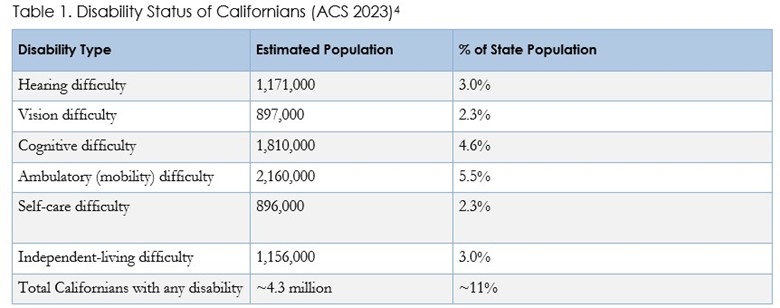
California Connect closes that gap by providing specialized communication equipment and services at no cost to eligible participants. Whether someone needs help hearing a phone call, speaking through a device, receiving emergency alerts, or joining a virtual meeting, the program adapts to individual needs.
There is no one-size-fits-all solution, as many participants use a combination of tools and services to stay connected at work, at home, and in their communities.
How California Connect Helps
The CPUC recognizes the need for diverse solutions, with California Connect providing three main service areas each designed around different communication needs.
The Equipment Distribution Program provides free communication devices to people who cannot use a standard telephone. These range from amplified phones and captioned telephones to Braille keyboards, hands-free headsets, and alerting systems that use sound, light, or vibration. Most recently, more than 1,200 new participants received equipment tailored to their needs.
The California Relay Service helps people who are deaf, hard of hearing, or have speech disabilities make phone calls. By dialing 711, users connect with trained operators who assist with relaying conversations. Some services provide captions in real time, others help revoice speech to make calls clearer, and remote conference captioning allows people to fully participate in work meetings and virtual appointments. In one year alone, Californians used relay services more than 320,000 times, highlighting how essential this service is to everyday life.
For individuals who cannot rely on speech alone to communicate, California Connect also supports Augmentative and Alternative Communication, often called AAC. Through this program, people can receive speech-generating devices such as tablet-based communication tools. For many, these devices create a voice where there was none, opening doors to independence, self-expression, and connection. The Voice Options program, now a permanent part of California Connect, has helped thousands of Californians communicate in ways that were once out of reach.
Reaching Communities Across California
California Connect operates service centers throughout the state, including in rural and tribal regions where disability rates are often higher and resources more limited. These centers provide in-person support, evaluations, and one-on-one guidance, helping people find the right tools without having to navigate the system alone.
The program also works closely with local organizations, disability advocates, independent living centers, and community groups to build trusted referral networks. Outreach efforts are designed to ensure that people learn about California Connect through places they already know and trust.
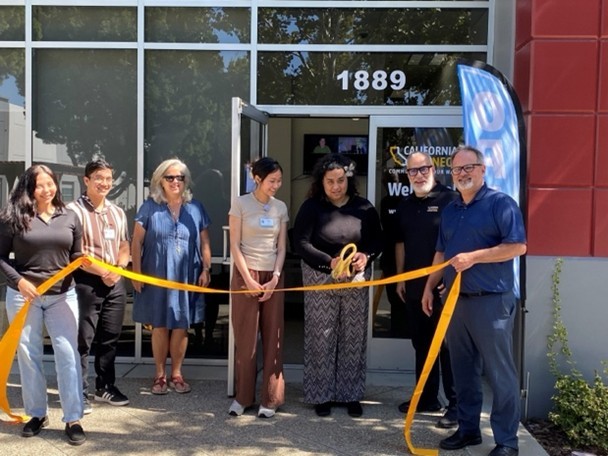
California Connect representatives cutting the ribbon to open a new service center.
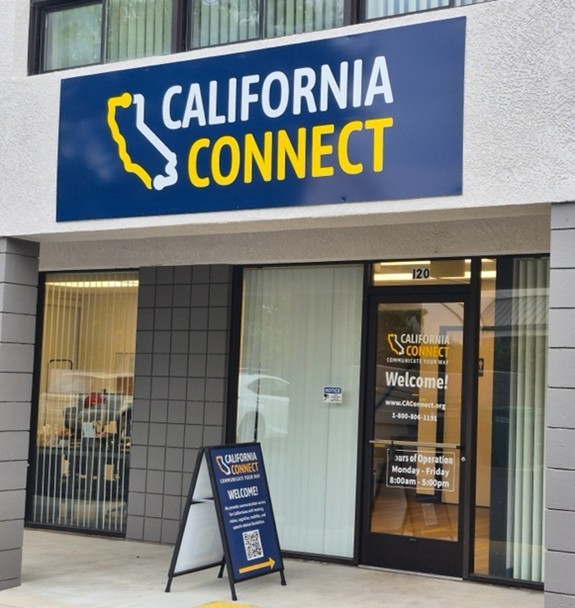
New signage at the California Connect San Luis Obispo Service Center.
In recent years, the program has also expanded online access, making it easier to apply digitally for those who prefer or need that option. This is especially important given that people with disabilities face greater barriers to internet access overall. By improving both online and in-person pathways, California Connect is reducing those barriers and increasing access statewide.
Modernizing the Program
The CPUC’s Feb. 26 decision modernized California Connect in several important ways.
Keeping Up With Technology
When the program was created decades ago, most calls traveled through copper landlines. Today, many calls use internet-based technology, often called Voice over Internet Protocol, or VoIP. The CPUC confirmed that California Connect can support modern internet-based and wireless technologies so participants can access tools that reflect how people communicate today.
Simplifying the Application Process
An online application is now available, and medical professionals can certify forms electronically. A paper option will remain available for those who need it. The goal is to reduce barriers and make enrollment easier and more accessible.
Strengthening Community Partnerships
The decision encourages partnerships with community-based organizations that serve people with disabilities, particularly in rural and underserved areas. These trusted local groups can help increase awareness and provide enrollment assistance.
Coordinating With Other Assistance Programs
The CPUC directed stronger coordination with programs such as California LifeLine, which helps qualified households save money on phone and internet services, and Medical Baseline, under which consumers are billed for natural gas and electricity use at their utility company’s lowest residential rate, so eligible individuals can access the full range of support available to them.
Improving Emergency Preparedness
The decision also strengthens coordination with emergency response agencies to help ensure communication tools are available at evacuation centers and during disasters, when staying connected is most critical.
How to Apply or Learn More
Californians with qualifying disabilities can apply to California Connect online, by phone, or by visiting a local service center. Applications are guided by trained staff who help ensure each person receives equipment or services that truly meet their needs. Relay services are available to anyone who needs them, simply by dialing 711.
As California continues to modernize its communication systems and prepare for future challenges, California Connect remains a critical part of making sure accessibility and inclusion stay at the center of that work.
To learn more about the program’s impact, progress, and future direction, view our new California Connect Annual Report or visit the California Connect webpage.
By Taseen Shamim, Public Information Officer