
How the City of Indio's Gigabit Network Supports Festivals, Local Residents, and the Wider Region
Spotlight on the Neighborhood

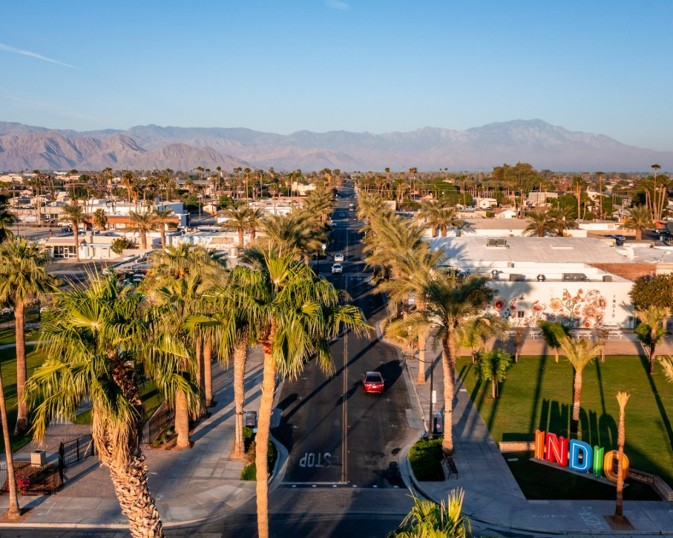
Aerial photograph shows Miles Avenue and Smurr Street in downtown Indio
A Growing Desert City
Every spring, Indio becomes one of the centerpieces of the global live music circuit, transforming from a desert city into a temporary metropolis of sound, crowds, and international attention. For a few weekends, its population swells dramatically as over a hundred thousand visitors arrive for its signature music festivals.
But when the stages come down and the crowds move on, the work of supporting both the city’s identity and its day-to-day life continues.
That balance between a globally recognized festival destination and a year-round residential community helped shape the City of Indio’s Last Mile Infrastructure Project, a citywide fiber broadband network funded through the California Public Utilities Commission’s (CPUC) Federal Funding Account. The funding, awarded in 2024, provided the city with a grant of nearly $9 million to build the project.
The project began with a practical question. How to address gaps in the broadband access while also preparing the city for continued growth in tourism, business activity, and public services. That planning gained momentum in 2022 when Indio received a Local Agency Technical Assistance (LATA) grant from the CPUC. The grant provided resources to assess existing broadband conditions and plan and design a network capable of reaching neighborhoods and community facilities where reliable, high-speed internet remained limited, including areas of downtown Indio.
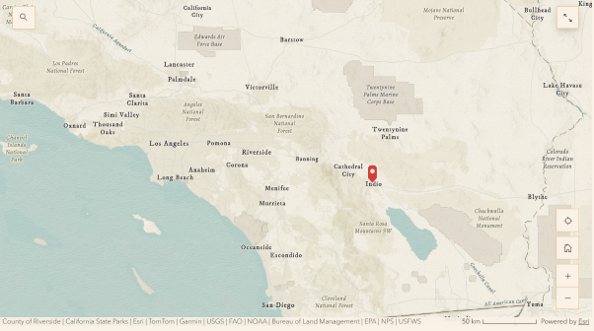
Indio, Calif. in Riverside County is a ~30 minute drive to Palm Springs and ~2.5 hours to Los Angeles and San Diego
As one of nine cities in the Coachella Valley Association of Governments (CVAG), Indio saw an opportunity to expand more efficiently. Rather than building a system from scratch, the city saw an opportunity to expand by coordinating with the region’s transportation system synchronization infrastructure (fiber) or CV Sync. The CV Sync project consists of upgrading the local agencies’ legacy traffic signal controllers, traffic management systems, and communication systems in order to coordinate traffic on corridors in the Coachella Valley.
“When we were doing our fiber master plan, we quickly realized there was a regional project going on throughout the valley… They were installing conduit and fiber through all our major thoroughfares, and we realized quickly we could leverage that to bring fiber across the city.” - Ian Cozens, City of Indio IT Director
By connecting fiber networks with local traffic systems, the City of Indio and its neighboring communities can better manage the influx of more than 125,000 festivalgoers each weekend. The technology helps keep traffic signals running efficiently, eases pressures on cellular networks, and strengthens coordination among municipal safety teams.
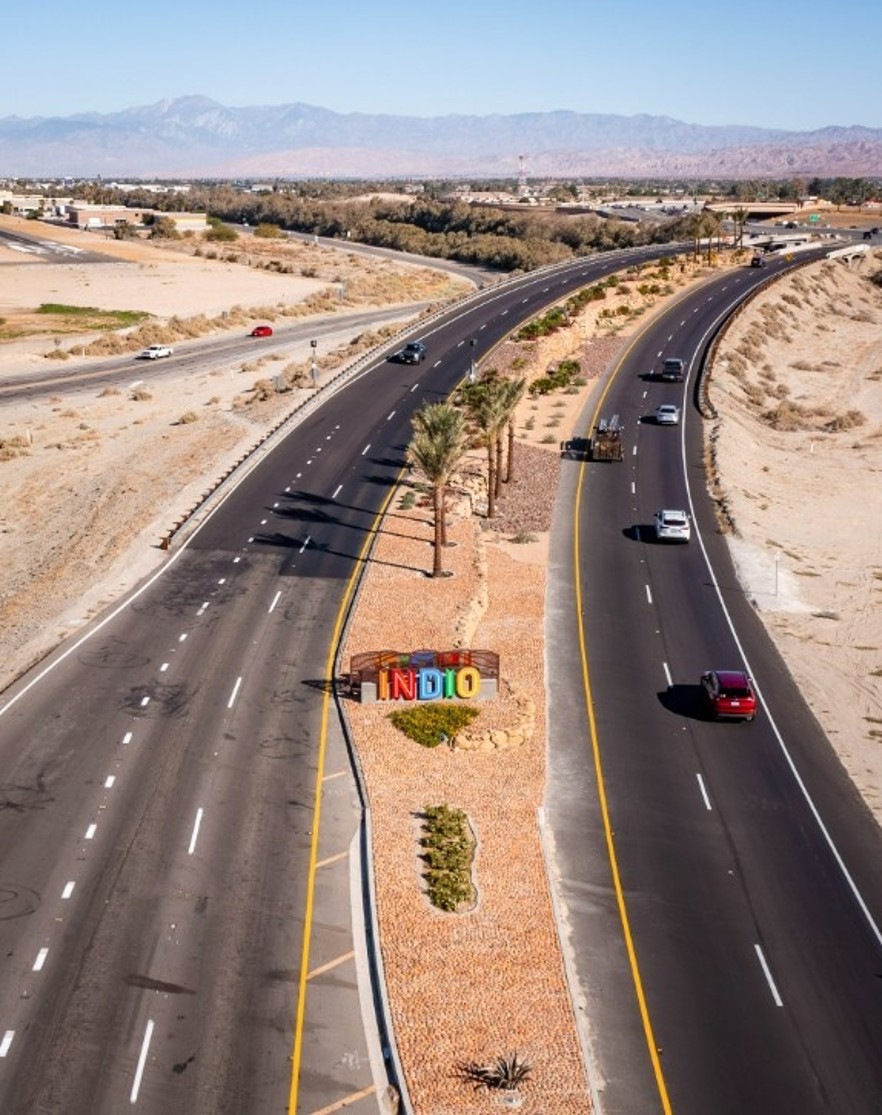
Indio welcome monument in the median of Indio Boulevard
Indio’s city manager, Jon Nicks, shared an anecdote from Justin Bieber’s Coachella performance in the spring (April 2026). During the show, Bieber pulled up YouTube on a laptop and played videos of his younger self.
“Even his computer was spooling a bit,” said Nicks. “There is additional capacity needed when you have so many people coming and everyone's taking a photo and posting it, that kind of thing.” - Jon Nicks, Indio City Manager
Indio's last mile infrastructure project strengthens the city’s digital foundation by fostering economic growth and tourism, including its festival identity, alongside the needs of the residents who call Indio home.
One Network, Two Realities
Indio is the largest and fastest growing city in the Coachella Valley and eastern Riverside County. While Indio is known globally as a “City of Festivals,” the infrastructure behind those events must serve two populations at once: the intense, short-term demands of large-scale events and the steady, year-round needs of residents.
The city experiences dramatic population surges, placing heavy demand on communications systems that support event operations, vendor coordination, public safety, and emergency response. At the same time, more than 2,000 businesses and 36,000 workers depend on those same systems to keep daily operations running smoothly, both during major festivals and throughout the year.
“The city is growing rapidly,” shared Nicks. “We have a lot of new businesses and restaurants coming in the downtown area. We did 30 ribbon cuttings in the last 12 months.” - Jon Nicks, Indio City Manager
With that growth comes the need for an infrastructure capable of supporting it. Beyond roads, sewer systems, and electrical service, fiber connectivity has become an essential part of the city’s infrastructure. Businesses increasingly depend on internet-based systems for transactions, digital menus, communications, and day-to-day operations. A stronger fiber network will provide the connectivity needed to support these businesses and visitors while helping Indio build the digital infrastructure to sustain its next phase of growth.
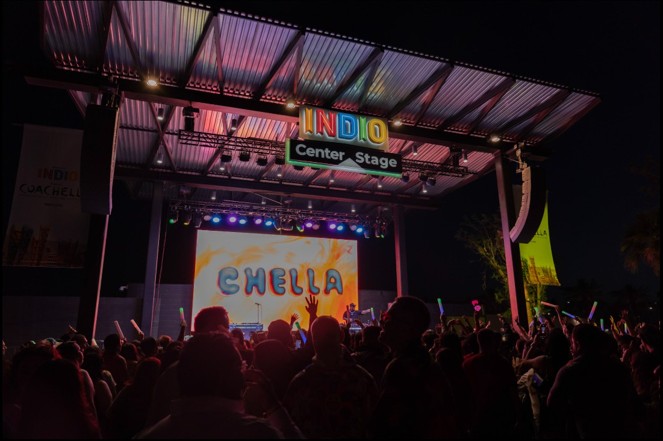
Center Stage event venue in Indio
Supporting First Responders
Indio's new fiber broadband network also plays an important public safety role.
With large crowds and desert temperatures during major events, reliable connectivity is critical for coordinating emergency services and responding quickly to health or weather-related incidents.
During the Coachella Valley Music festival held every April, temperatures shift dramatically with daytime highs ranging from 85 to 90 degrees Fahrenheit and then dropping to 50 to 60 degrees Fahrenheit by nighttime.
For visitors who may be unaccustomed to the desert heat and rapid temperature changes, these conditions can increase the need for timely assistance and coordinated emergency response. Reliable broadband connectivity helps officials communicate more effectively across 911, public safety, and other agencies while also enabling faster, more reliable communication with festivalgoers when conditions require assistance.
Nicks shared how the city’s police chief effectively runs two parallel operations during major festivals: one focused on residents and everyday city activity and another dedicated to managing the influx of visitors. That dual structure requires constant coordination, rapid communication, and reliable access to real-time information across agencies.
“Staff serve the city like we normally function because we still have residents, whether they're attending the festivals or not. Then we double it during festivals. He [city police chief] is operating two completely independent staffing teams.” - Jon Nicks, Indio City Manager
Those demands make strong communications infrastructure essential.
In the summer months especially, Indio’s high temperatures add another layer of urgency to public safety planning. Heat-related emergencies can escalate quickly in, making rapid communication between agencies critical for response and coordination.
Investing in the Community
For city leaders, the last mile infrastructure project is an investment in the people who call Indio home.
Indio’s population has increased by 25 percent for the past 15 years, making reliable broadband essential for accessing education, healthcare, and other everyday services. The need became especially apparent during the COVID-19 pandemic, when remote learning and telehealth exposed gaps in internet access across some neighborhoods.
These gaps include unmet internet needs at Indio schools, medical facilities, senior residences, and within the general population including the downtown area. Nicks described how school districts distributed mobile hotspots to help students stay connected, but those solutions often fell short in areas where cellular service was unreliable.
“Bringing fiber to these areas will improve that,” said Nicks. “If they have to do e-learning again, they'll be able to get reliable high-speed internet that will allow them to engage with their teachers and their fellow students.” - Jon Nicks, Indio City Manager
The same challenges impact Indio's healthcare system. Telemedicine became an important tool for residents seeking medical care from home, but stable video appointments depend on consistent broadband service.
The city's new fiber internet infrastructure also supports a large senior population. Through the Indio's partnership with CAL FIRE, residents can access a nurse helpline for non-emergency medical concerns. Dependable fiber connectivity is critical for healthcare professionals to evaluate patients remotely, thereby also allowing emergency responders to focus resources where they are needed most.
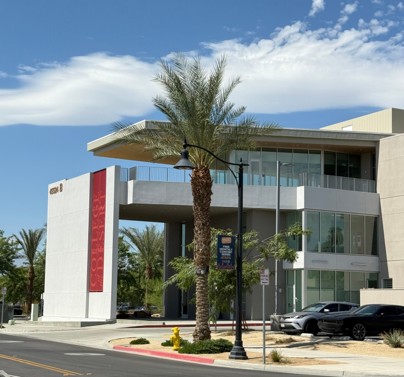
College of the Desert Satellite Campus opposite of City Hall on Towne Street
For the city, their last mile broadband project represents more than simply faster internet speeds. It is about ensuring students can learn without interruption, seniors can access healthcare from home and residents across every neighborhood have the digital tools needed to participate fully in modern life.
Last Mile Fiber Impact
Indio has become a destination for new residents, businesses, and investment, in addition to its role as a hospitality leader and festival host. The CPUC’s Federal Funding Account broadband project grant supports the city's own infrastructure investments and builds on a broader transformation taking place in the area.
Once completed, Indio's last mile infrastructure project is expected to deliver faster and more reliable internet access across the city, where thousands of people will benefit from it.
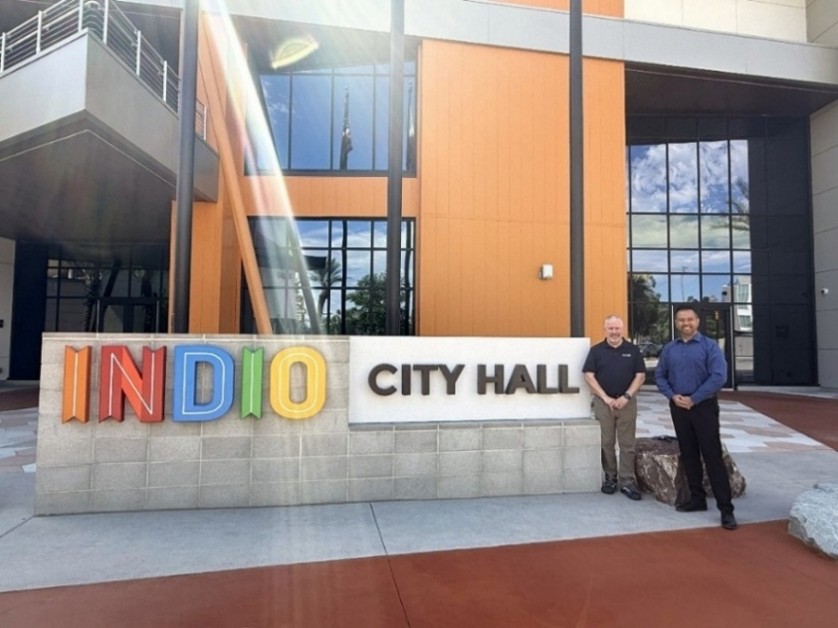
Ian Cozens, IT Director, and Jon Nicks, City Manager
As Indio continues to grow as an internationally recognized festival destination, city officials say the challenge ahead is not on choosing between supporting visitors or residents but ensuring that both can thrive on the same foundation.
In that way, the last mile infrastructure project is not just about expanding broadband.
It is an investment in the connective tissue of a city with two distinct rhythms. The international stage, where festivals draw visitors from around the world, and the everyday community, where residents work, learn, and build their lives. A stronger network brings those two worlds together, ensuring that the infrastructure supporting the world’s attention also strengthens the community that calls Indio home.
Learn More
Project: Fiber Master Plan | Indio, CA
Grantee: City of Indio, California
ISP Partner: Onward
Grant Administered by: California Public Utilities Commission (CPUC)
Awarded: Up to $8.9 million via CPUC Resolution T-17833 (Aug. 2024)
Program: CPUC Last Mile Federal Funding Account
Program Map: CPUC Federal Funding Account Awards Map
Project County: Riverside
Fiber Deployed: 19 miles
Estimated Benefitting Population: ~5,200
Maximum Speed: 1 gigabit symmetrical
Technology: Fiber using passive optical network
Lowest Cost Plan: $29.95/month for eligible customers
Connects to: Middle Mile Broadband Initiative
Planning Grant: CPUC Local Agency Technical Assistance
California Connectivity Stories
This story is part of the California Connectivity Stories Project, which highlights rural and urban broadband internet initiatives by local governments, Tribes, open access partnerships, and emerging internet service providers. California invests in essential broadband infrastructure that provides connectivity for daily life, climate resilience, public safety, and more. Featured projects are supported by the California Public Utilities Commission's last mile Federal Funding Account established in Senate Bill (SB)156 (2021). Learn more
Author: Paloma Avilez with the California Public Utilities Commission's Broadband Regional Initiatives Team
Oral Stories: Indio representatives Ian Cozens and Jon Nicks
Gallery: California Connectivity Story Series