Thinking in Generations: The Santa Ynez Chumash Path from Running Water to Resilience and Broadband

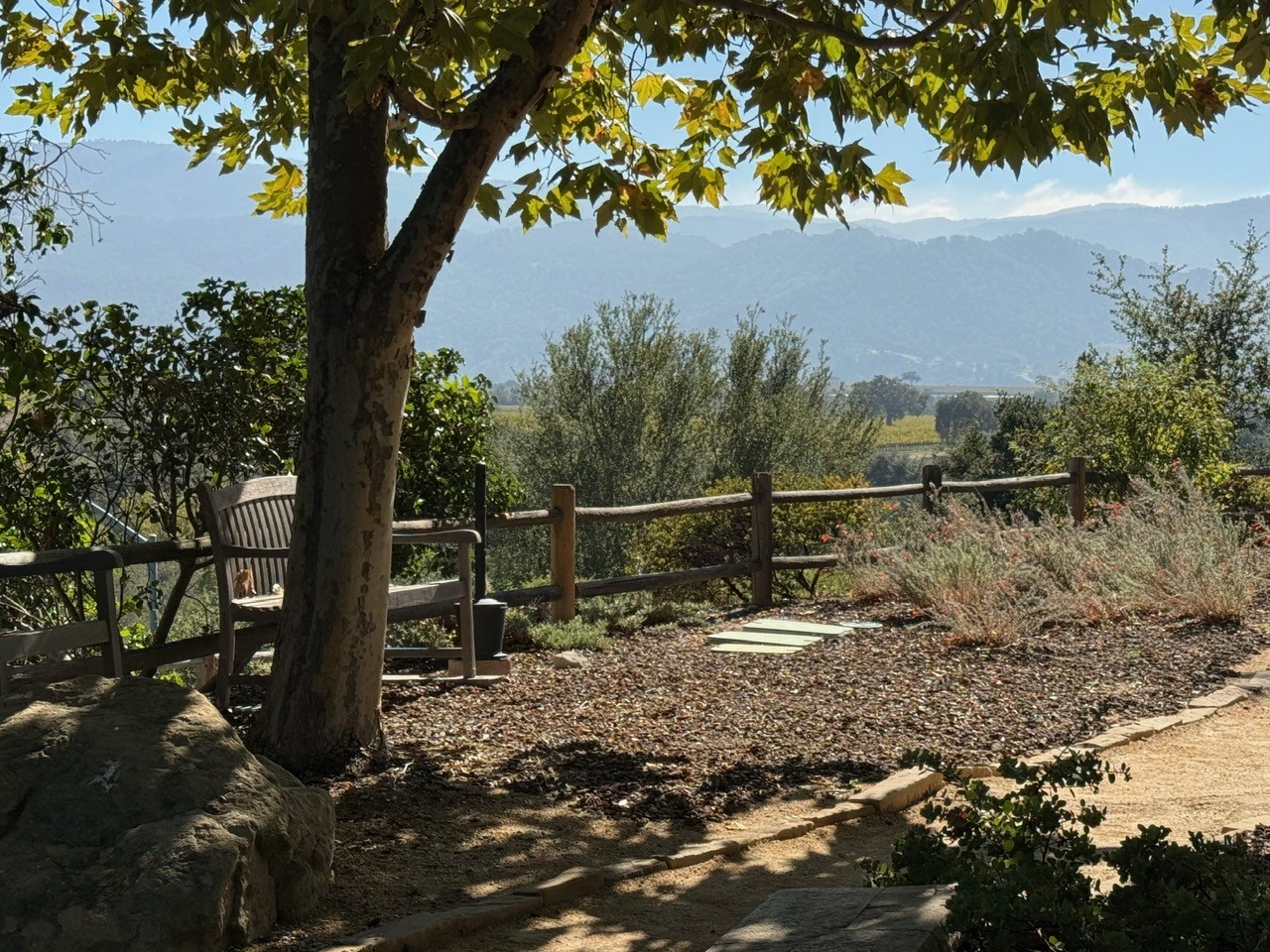
Santa Ynez Chumash tribal offices overlooking Santa Ynez Mountains in Santa Barbara County.
Running water. Wastewater treatment. Internet access. Many of us take these essential services as a given, but the Santa Ynez Band of Chumash Indians, whose reservation is located in Santa Barbara County, has built or partnered to secure these systems throughout its history. The infrastructure and partnerships the tribe has forged are long-term investments in community sustainability.
The Santa Ynez Chumash raised funds to bring running water to their reservation in 1969. By 2000, they established a wastewater treatment plant to optimize water conservation on their land. These and other endeavors, including Chumash energy efficiency partnerships, are unified by environmental and cultural stewardship for new generations.
Now, in an era when reliable connectivity is fundamental to modern life, Chairman Kenneth Kahn finds himself regularly pulling over at a roadside spot to make calls due to patchy cell service, and he sees Chumash residents struggling to get online.
The tribe's latest project, a California Public Utilities Commission’s Last Mile Federal Funding broadband network, is a continuation of decades of self-reliance and utility infrastructure experience. This time, the opportunity stems from years of coalition building and knowledge.
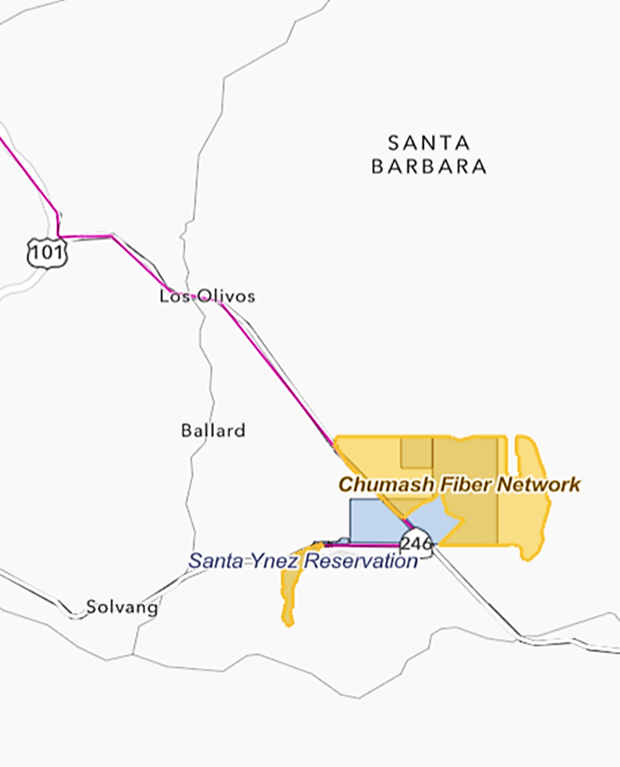
The Last Mile Federal Funding Account is a California program that helps communities build the local internet infrastructure needed to connect homes to fast, reliable service. Through this program, the Santa Ynez Band of Chumash Indians received up to $4.7 million to build and operate the Chumash Fiber Network in Santa Barbara County. The project will bring fiber-optic internet to about 400 locations, serving an estimated 853 people with affordable, high-speed connections and strengthening the Tribe’s long-term control over its digital future.
The Long View
When asked what generation Chumash he is, Kahn finds the question almost absurd. "Let me see, 13,000 years divided by how many generations?" he responds. This thinking drives the Tribe's approach to infrastructure and self-governance.
From drinking water in 1969, to the 2000 decision to develop a wastewater treatment plant and through today, the Santa Ynez Chumash are committed to serving their tribal community. Concerned about the climate and resiliency, the tribe's steps to reduce greenhouse gas emissions include energy efficiency partnerships and wildland fire management. Their large water reuse program has exceeded expectations, using less water than planned years earlier.
The tribe's long view continues with building educational and cultural resources for intergenerational learning, and a museum that opened in May 2025. Further, Kahn tells how the Santa Ynez Chumash are building 143 homes on over 1,400 acres of ranch land known as Camp 4, after getting the land placed in a trust through federal legislation in 2019. These homes will allow tribal members to return to their ancestral land and live among family. And members are asking when they can sign up for the new fiber internet service.
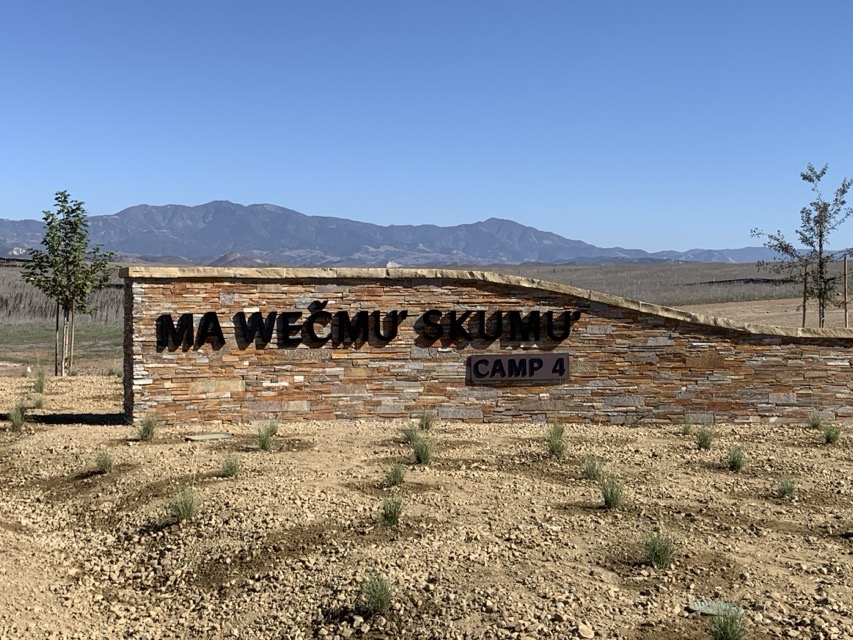
Camp 4 Santa Ynez Chumash new housing community
The Power of Partnerships
The Santa Ynez Band of Chumash Indians' approach to broadband mirrors its strategy with other infrastructure: develop it themselves, but not alone.
"You have companies that come in, interest groups that come in, and they develop relationships for now. We develop relationships for now, tomorrow, and the future" —Chairman Kenneth Kahn
The Santa Ynez Chumash participate in tribal coalitions, including the National Congress of American Indians and the Tribal Alliance of Sovereign Indian Nations as well as14+ Southern California tribes that share knowledge and support. They also strive to coordinate with surrounding local governments and legislative representatives. Kahn describes how this creates a multiplier effect, for example when the Chumash received a $1.4 million grant from the Bipartisan Infrastructure Law in early 2025 to support planning an 8-mile bike path to connect the Santa Ynez Reservation with Central Coast communities.
For broadband, last mile and middle mile partnerships with the State of California combined with other Santa Ynez Valley connectivity efforts allow cost-sharing, while maintaining tribal control. "If we did this alone, it would be much more expensive," Kahn reflects. "I think we've got some great opportunities to be able to balance it out for our members, our future generations."
A Defining Moment for Broadband
Chairman Kahn recalls the California Tribal Roundtable in 2021, where a pivotal conversation unfolded about the Reservation's lack of reliable and affordable internet and overall connectivity. They were sitting around a table discussing long-term goals with state and local partners.
It was during that meeting that the importance of having a plan became clear. The tribe received a 2022 technical assistance grant from the national Tribal Broadband Connectivity Program for network engineering and the Tribal Technical Assistance grant for strategic planning from the CPUC. Technical assistance has strengthened their capacity to develop the Chumash Fiber Network, which is now in progress.
Connecting the Dots
The tribe maintains its own wildland fire group because "there are opportunities for us to partner with the Bureau of Indian Affairs for fuels management and cultural resource protection." The Chumash broadband design reflects California's wildfire reality, and infrastructure goes underground "so that when there is a fire, it's not impacted."
The need isn't theoretical. During game one of the 2024 World Series, fire destroyed 6,500 acres of aerial fiber on the west side of the Santa Ynez Valley. The Chumash Casino Resort, with redundant infrastructure, became a lifeline for the community.
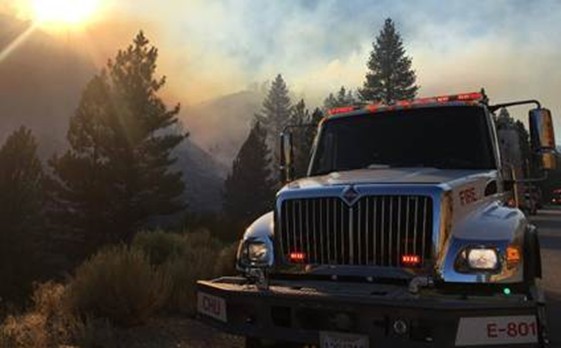
Chumash Fire Department, a division of the tribal government devoted to emergency preparedness for the Santa Ynez Reservation and a resource for the greater community.
The fire's lasting impact was personal for Kahn. He says that his connectivity hasn't been the same since then. He's developed workarounds, including finding roadside pullouts where there's better service and turning video off, "…sometimes I've got to turn the camera off because I just don't have the bandwidth, and I'm just like, what year are we in?"
Learn More About the Chumash Fiber Network
Project: Chumash Fiber Network
Program: CPUC Last Mile Federal Funding Account
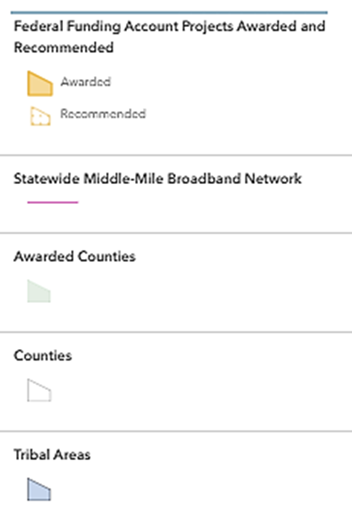
Map: Federal Funding Account Awards Map
Administered by: California Public Utilities Commission
Awarded: Up to $4.7 million on August 22, 2024, in Resolution T-17833
Grantee: Santa Ynez Band of Chumash Indians owns and operates the network
Project County: Santa Barbara
- Project Size: 6 square miles
- Estimated Locations: ~ 400
- Estimated benefiting population: 853
Maximum Speed Offered: 5 gigabits symmetrical
Technology: Fiber using passive optical network
Lowest Cost Plan: $40/month
Connects to: Middle Mile Broadband Initiative
Planning Grants: Tribal Technical Assistance (state), Tribal Broadband Connectivity Program (national)

By Michele King (Sr. Policy Analyst) with the CPUC’s Broadband Regional Initiatives team
View in story map mode which include graphics and animations.