
What is a General Rate Case (GRC)?
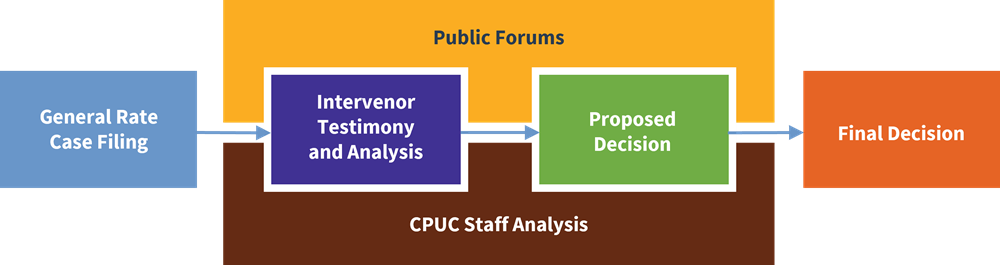
Through the General Rate Case (GRC) process, the CPUC reviews electric utility investments plans, operating costs, and financial assumptions before they enter rates. The CPUC uses the GRC process to apply cost discipline to utilities spending plans, without compromising on reliability, safety, and the ability to connect new customers to the grid. GRCs also determine how authorized costs are shared across different customer groups, such as residential, commercial, agricultural, industrial, and street lighting.
The GRC Process
|
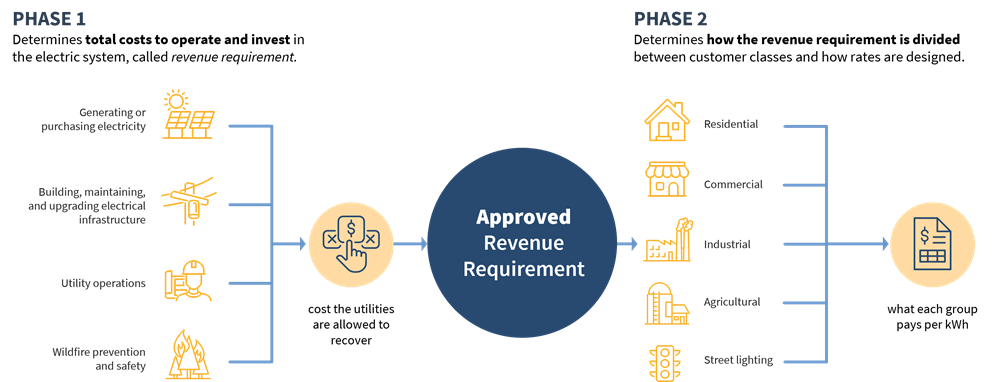
In Phase I, utilities submit proposed budgets to operate, maintain, and improve the electric system. Consumer advocates, local governments, environmental organizations, large customer representatives, and other parties (all known as “intervenors”) review the proposals and may support, oppose, or recommend changes to specific requests. Separately, CPUC staff conduct a review of the utility's application and evidence submitted by all parties. Based on the full record, the CPUC approves only those costs it finds just and reasonable to provide safe, reliable service and meet legal and public policy requirements. The final number approved by the CPUC is called the “revenue requirement” or the total authorized costs of operating and investing in the electrical system. If we think of utility rates like a pie, the revenue requirement would determine the size of the pie.
|
In Phase II, the CPUC determines how the approved revenue requirement pie is divided among different customer groups, such as residential, commercial, agricultural, industrial, and street lighting customers. The CPUC also reviews how rates are designed to reflect factors such as when electricity is used and the cost of providing service. Utilities then propose specific rates to collect the approved revenue from customers within each class. Depending on the customer type, rates may include a monthly fixed charge, charges based on electricity usage, or other charges related to a customer's demand on the electric system. The purpose of the Phase II is to fairly divide the revenue requirement among all customers, however, no new costs are approved in the Phase II. The CPUC ensures that rates are designed in adherence to a set of adopted Rate Design Principles, such as fairness, cost causation, customer understanding, and appropriately incentivizing behavior that can reduce future costs. |
For the state’s large investor-owned utilities, GRCs are filed every four years.
GRCs and Affordability
When reviewing utility spending proposals, the CPUC carefully examines whether requested investments and operating costs are reasonable, necessary, and supported by evidence, and consumer advocates and other parties often identify additional opportunities to reduce costs.
The CPUC has developed affordability metrics that are leveraged by staff and decision makers to understand how proposed rate changes needed for essential service may affect a customer’s bill.
However, the GRC is not the only proceeding that impacts customer bills, there are other important opportunities including wildfire mitigation cost scrutiny, transmission cost oversight, advocacy before FERC, and the implementation of legislative direction through affordability-focused proceedings.
How to Participate in a GRC
There are numerous opportunities for public input throughout the GRC process. Public Forums, including virtual and in-person public participation hearings and Commission voting meetings, provide opportunities for the public to be heard in the process without becoming a party. The public can also file comments on the docket throughout the proceeding.
Intervenors may also participate in a GRC by becoming a party.
What Happens After a GRC is Approved?
The CPUC reviews detailed cost data for various areas of utility operations and approves a budget for the first year – called a test year – of the GRC cycle. The decision also approves adjustments to the revenue requirement for years two through four based on forecasts of inflation, labor costs, and other factors. The utilities file annual advice letters to implement those approved forecasts, reflect newly authorized changes, and reconcile certain costs before rates take effect each year. The Commission has put in place regulatory mechanisms to adjust the costs approved in GRCs for unforeseen circumstances. For example, the Catastrophic Event Memorandum Account allows utilities to record costs for state emergencies declared by the governor.